Gamification and Communities of Practice

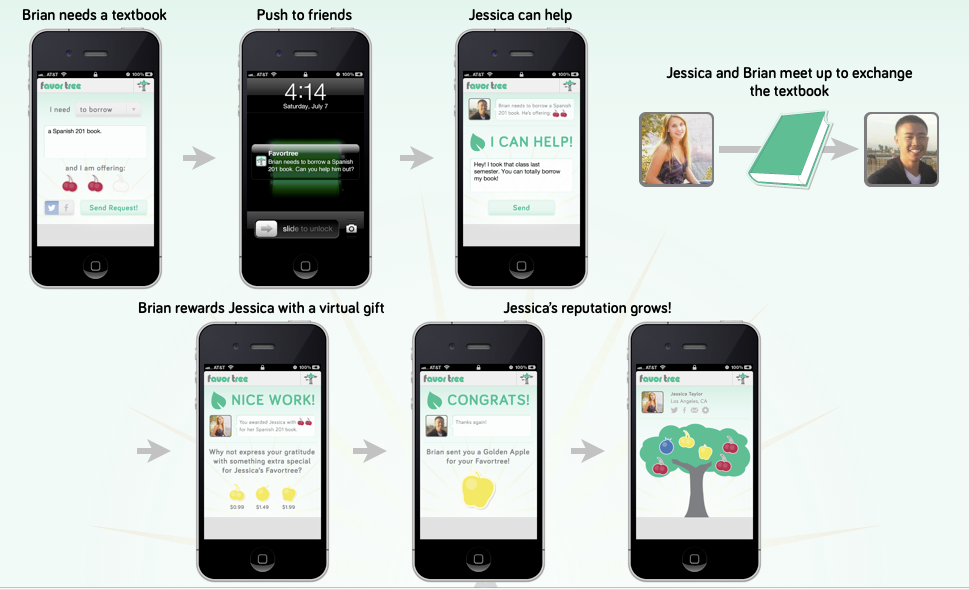
I was recently looking at the concept FavorTree (now discontinued unfortunately) which was a mobile gamification app designed to display the good work any person was doing within the neighbourhood.

FT

Lend out your ladder or teach someone how to unblock a drain and you would see your virtual ‘tree’ gaining fruit.

It immediately reminded me of a Community of Practice (CoP) called Fiery Spirits (http://vimeo.com/16024731) which connects people who have a shared interest in making a difference in rural communities.

I was wondering if anyone has combined Gamification within a CoP, in the case of Fiery Spirits, to better reach out to younger members of the community and promote the idea of being a good neighbour, sharing and learning together.

The Google Search Consultant

Like me you’ve seen these guys before, they come into a team meeting having spent the entire day before googling every part of a solution/technology they don’t understand, then they try and grill you in the meeting. Hey I don’t mind it, I find it quite refreshing, but recently it went to a different worrying level.

An internal client had a requirement and I was invited in to give a presentation of my thoughts. I was on safe ground, I could only think of a handful of guys in the company who had the experience to do the work. So I give my presentation, it’s caveated, I’m not aiming too high because the client’s budget is ridiculously low, I’m delivering an expectation based on value.

Then 20mins in, a consultant colleague starts discussing that he’s seen better and is sure we can deliver a better product. He has nothing to back his claims up, I’m left in a quandry, do I enter into a debate with him about his lack of expertise, no, he’s trusted by the client and that trust is important, plus one of us must stay professional, so I take it on the chin.

After the meeting everything becomes clear. He doesn’t like my semi-automated low cost solution that matches the client’s budget. He’s seen a new tool that he’s wanted the division to invest in but has been looking for a project that would support it, and this is it.

He then offers a new solution to the client using the tool we don’t have, stating all it’s benefits and non of its negatives. The client is chuffed to bits.

I ask him whether it was worth belittling me in the meeting and discuss that it’s not a good idea proposing a solution we haven’t delivered before using an expensive tool I have reservations about, not a good decision to ask these questions. He thanks me for my time and states he’ll get in touch if they need my expertise in the future.

My outbox doesn’t stay quiet for too long though, he’s soon inviting me back into an email chain for my thoughts. Looking down the chain I understand why.

He’s costed the new solution, it’s a snip at around 3 times the original price. The client hits the roof, they’ve realised the benefits they were sold were actually benefits to us, not them. The tools automation would only decrease cost for future projects much further down the line and why should they pay.

I won’t go on further with the story as things are still in flux, suffice to say that I’m hoping the consultant will realise the error of their ways, but I doubt it.

That damn google search has a lot to answer for sometimes.
Networking Drone Data

I noticed with some puzzlement Eric Schmidt, Head of Google, calling for civilian drone technology to be regulated, warning about privacy and security concerns.

Like most cynacists I then got to thinking how could such new technology harm the established data magnets.

video-civilian-drones-articleLarge

My first thought was that if drones could share land and road data, with local enthusiasts being able to pin-point accident blackspots long before established providers could. The potential for this type of super up to date data could harm companies such as Google who provide a more traditional mapping function. Not to mention that using drones could produce a much more up to date Street View function.

I then saw a riveting article regarding the possibility the file-sharing drones and an announcement from Pirate Bay that in future parts of its site could be hosted on GPS controlled drones. In this way, they could provide a completely unrestricted “airborne Pirate Bay”.

I wondered if other people viewed drone technology as divisive or ultimately a technology for improved change.

WHO MOVED MY CHEESE

Last week I got round to reading one of my wife’s new books, “Who moved my Cheese”, a quick book which attempts to help it’s readers make sense of any change currently happening in their life, in a fun and simple manner.

Masthead-WhoMovedMyCheese

One interesting part of the book, early on, makes the statement that …companies are constantly changing. They keep moving our Cheese. While in the past we may have wanted loyal employees, today we need flexible people who are not possessive about ‘the way things are done around here’.

It then describes a major upheaval in the lives of 4 characters and how they respond to change. Some people may think the book is aimed a little too simplistically but its still a good read and I’d be interested in what anyone thinks of it.

A youtube version of the story can be seen here – http://www.youtube.com/watch?v=P4Mb-x8UWRA

Neolithic Social Media

I was watching an interesting documentary the other day regarding an ancient settlement unearthed in the eastern mediterranean. They used slate stone garnered from a nearby hill-side, which was in infinite supply, to communicate between friends and households.

On the numerous slates found people scribed about how they were feeling as well as carry out a full discussion on the gossip of the day. The slate would be passed around friends/housholds for people to continue with the discussion or alternatively put down how they were feeling.

These slates would also be kept and stored by individuals, like a diary.

So there we have it, Facebook, Twitter all in one, with much improved security as you would decide who you passed your slate to!

A Merry Virtual Xmas

Just wanted to wish anyone who reads my blog a very merry christmas.

About 10 years ago I helped create a festive site that you might like to visit at www.magical-mischief.com


Happy Xmas

Darren


Communities of Practice for Tacit Knowledge Retention

About 2 years ago the Royal Navy had a requirement to outsource their Marine Engineering training. We were in discussions with regards to how they saw their new generation of learning evolving, and some themes were similar to other large-scale engineering clients.

Marine Engineers seem to have a massive amount of TACIT knowledge. By that I mean in-depth important knowledge that they need, but can’t really tell you where it came from. Most of the time its handed down from senior to junior over time. This presents a real learning risk in that, over time, with expert senior engineers retiring, there is a real possibility of losing the ability to train new graduates effectively.


On the community side

It was important that we devise a system that helps to identify potential knowledge gaps by being more ‘in touch’ with its own learning community as well as experts from within that might previously be ignored.

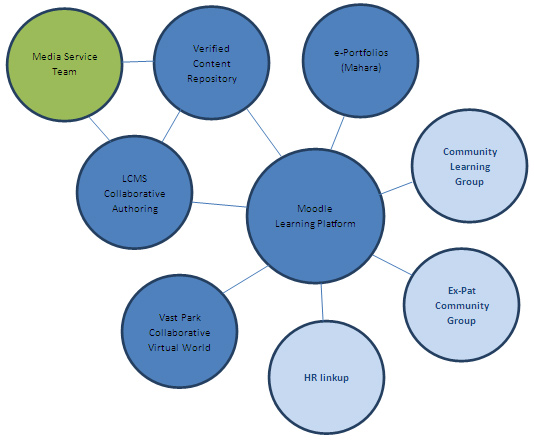
Setting up a community learning group for your own learning professionals, allows them to keep in touch with each other, to discuss how differing learning needs are being met. 

Also setting up an Ex-Pat (or soon to be Ex-Pat) community group allows senior engineering professionals to join in and discuss their views on how we able to improve graduate induction training as well as on-going work-based learning programmes.

Having a simple HR linkup also allows us to zero in on experts in the undergrowth who are approaching retirement age and see if we can bring them on board into our community discussion groups.

On the technology front

We chose the ’open source’ Moodle platform because:

  • It could be de-centralised, so that individual departments could take control of their own curriculum. Invariably, large learning platforms in large organisations are seen as too distant, too remote. Having a flexible learning platform that would fit the need of every department was a major goal for us
      
  • Was extremely easy to use, as we wanted our learning curriculum to grow as each department is able to better identify and fill training gaps.
     
  • Was affordable

We added a Mahara e-Portfolio system to our mix as it was important to allow university graduates the opportunity of bringing their university e-Portfolios with them to their new career. This allowed for far more intimate knowledge of graduates.

It was also important to allow internal learning experts (as well as senior experts) the opportunity to easily add quality new learning content to fill training gaps quickly. We also proposed our own in-house rapid authoring tool that is easy to use, yet powerful enough to produce compelling e-learning.

And to help with the production of this rapid e-learning, a media services team combining graphics artists, 3D modellers, as well as training professionals is was to be on-hand to bring all this content to life.

Another vital part of our relationship with this client was to recognise that they have many of their best experts in distant foreign lands. So we devised a virtual world server called ‘Vast Park’ that allows disparate experts (as well as graduates) the opportunity to meet up in a virtual world…. Brainstorm, share ideas, and collaboratively help each other.

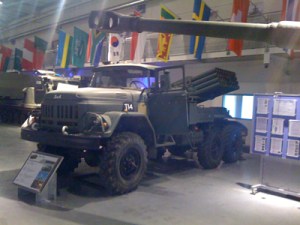
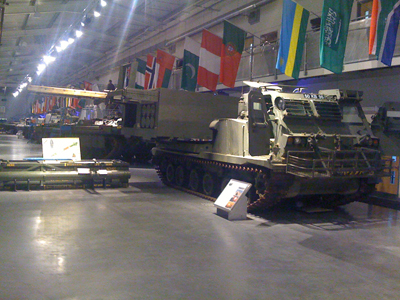
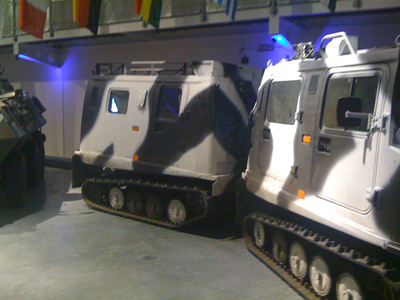
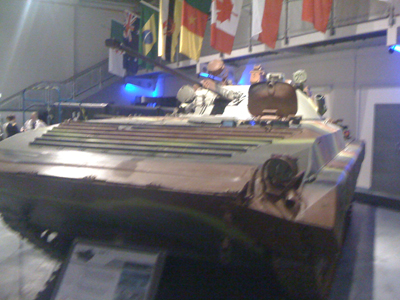
Defence Academy Museum

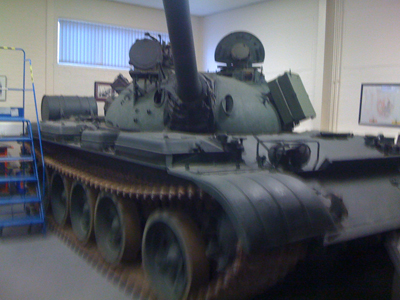
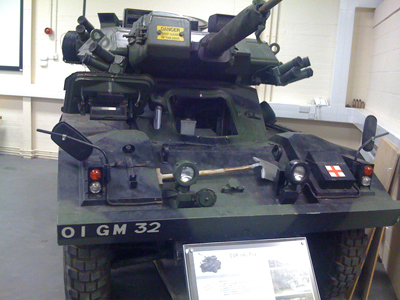
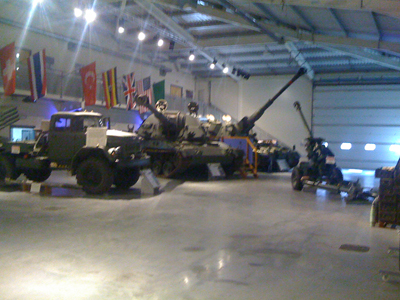
Seaching through my old photos and noticed a batch that I took whilst at the Defence Academy in Shrivenham.

The photos show there ‘Museum’ room where a number of military vehicles are on shown, from past til present.

I must admit that I did make myself look like a complete idiot, running around and taking photos with my iPhone whilst I was there for a conference, but just couldn’t stop myself.

I wonder if anyone can correctly identify all the vehicles ?


ITEC Simulation Conference

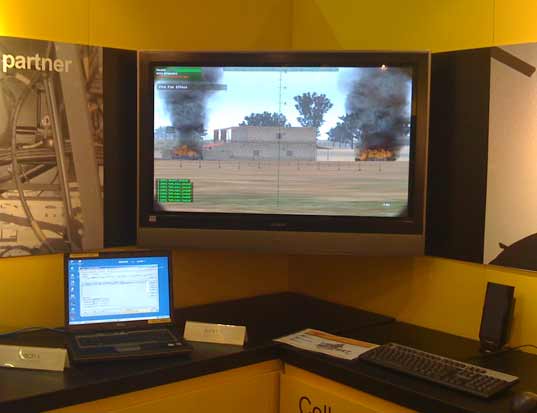
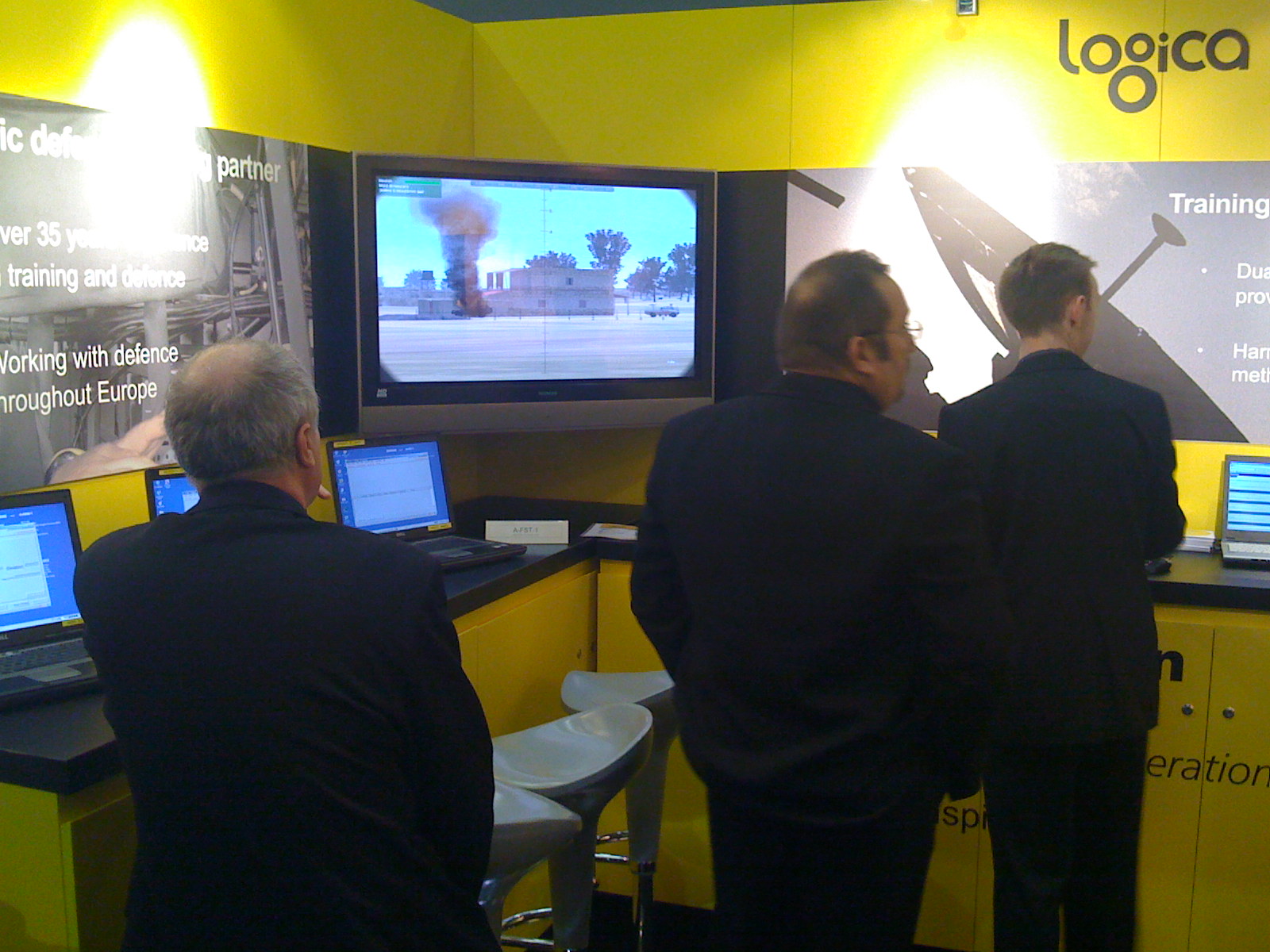
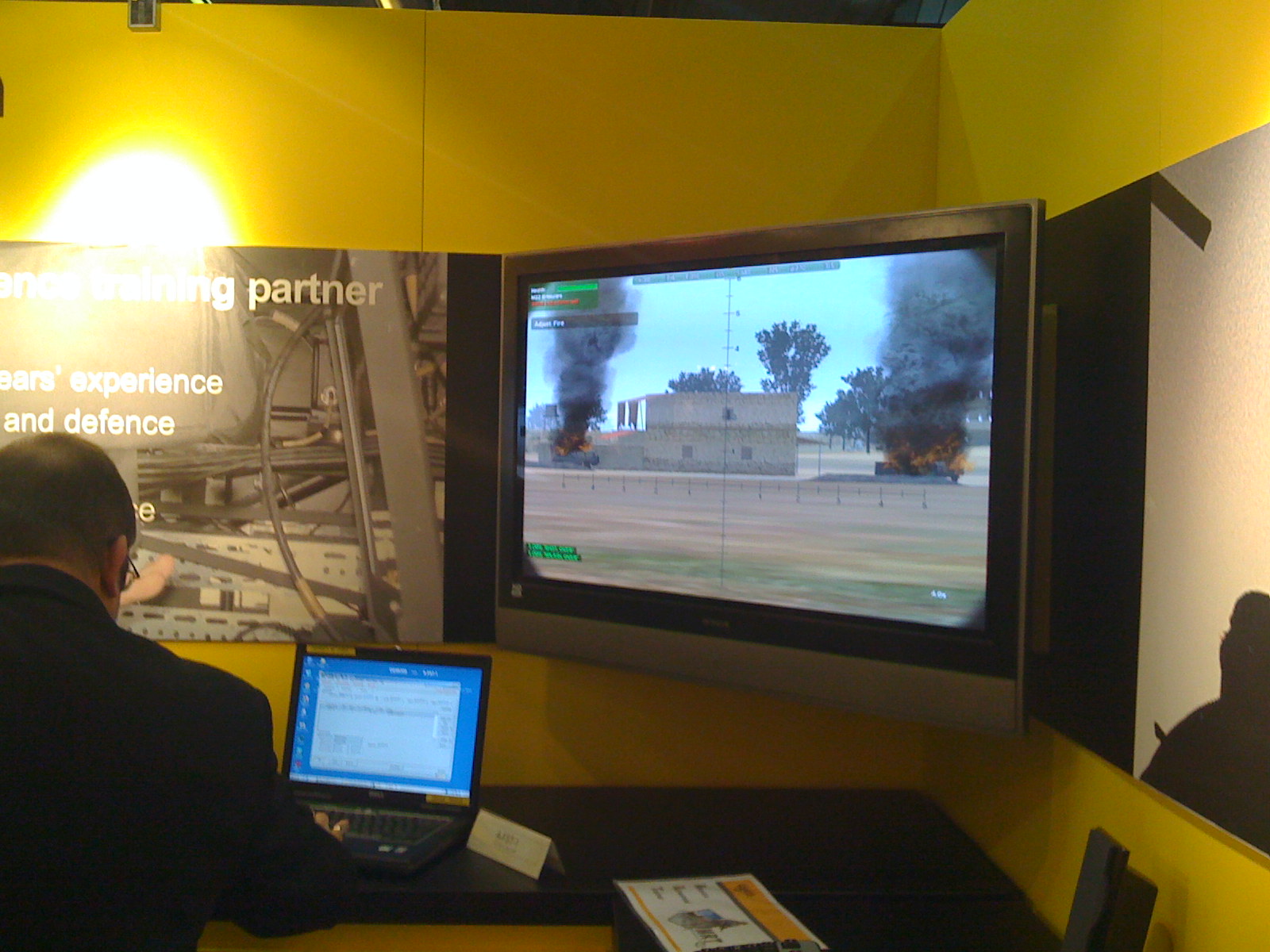
Found some old images of my prototype LVC Artillery Simulator demonstrated at ITEC a couple of years ago so thought I’d upload them.

The prototype allowed Forward Observation Officers (FOO) to survey the virtual scenario (at ITEC we had a ground view as well as a UAV view) and bring artillery fire onto targets using the actual FC-BISA system used in the British Army’s Warrior APC’s.

The resultant fire would then be modelled in the virtual environment, so that the learner could redirect fire as necessary to destroy insurgent positions.

Innovation in Learning

Thought I’d pop down a link to a presentation I did that is being displayed in our central London Innovation Centre.

Presentation

It covers some of the work I’ve been doing as well as one or two other bits from guys within the company.

http://www.lhls.org/Sparks/

It does run a little slowly so just hand in there!