The Drone Co-operative

Introduction

With the advances of commercial drone technology and parallel computing I’ve started to envisage a possible future where small companies or a co-operative of entrepreneurs can create there own city-wide internet/telephony platforms.

The main premise is that commercial drones would be used to deliver a small-scale web service to customers. This service would allow users to freely access a city-based intranet/social media service which is separate from anything offered on the internet, therefore offering a more secure method of local communication. 

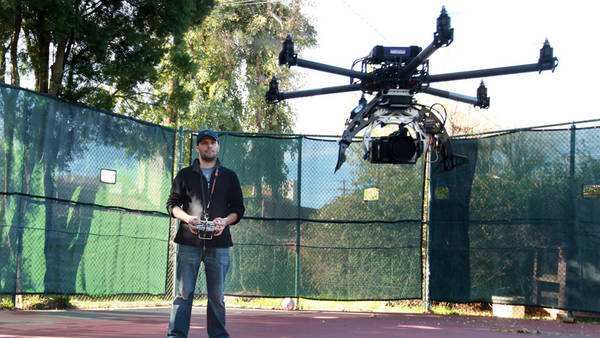
Drones

Separately, full web-access could be offered for a monthly fee. Again to create a more secure framework, an integrated web search feature would be introduced therefore by-passing existing web offerings such as Google and Bing.

This integrated search would give preference to local search results over what we have now, which is a conglomerate based one, with large companies able to hold sway.

Users may flock to the new system in the knowledge that access data on them is not being offered for use by conglomerates.

In a world where the introduction of Augmented Reality technology such as Google Glasses and the inferred extra private data that will eventually be held on consumers, those consumers may now be extremely interested in having a new type of secure local web provider.

The Co-operative Approach

I foresee a situation whereby a number of small drone companies as well as private entrepeneurs would come together as a co-operative so that there drones could be used in this manner, therefore reducing cost issues.

These commercial drones would obviously continue in their normal business operations, providing specialist contract work to larger companies.

Technical advances envisaged

Obviously the above technical platform is not available right now, it takes into account that advances in certain areas will continue:

  • that commercial drones will continue to evolve:
    • have greater range and time in the air
    • can be placed into specified geosynchronous orbits
    • have on-board server technology
  • that the advances in parallel computing continue to gain pace offering small companies the ability to create there own high performance server farms for a very low outlay.

The following web articles give credence to the above statements:

http://news.bbc.co.uk/1/hi/programmes/click_online/9708309.stm

http://mashable.com/2012/03/19/the-pirate-bay-drones/

http://phys.org/news/2013-04-adapteva-parallel-boards-summer.html

http://www.azcentral.com/business/news/articles/20130424telecom-equipped-drones-could-revolutionize-wireless-market.html?nclick_check=1

Next steps

I do need to do some more thinking about whether this really would be something people might be interested in and whether government would indeed ever allow it. I’m extremely interested what this approach could mean for new concepts such as Big Data, as we move forward.
Can Big Data + Analytics + Community of Practice + Virtual World = Collaboration for Key Decision Making

I know, not a very catchy title, but for now it will do!

For quite some time I’ve been promoting the concept of integrating Communities of Practice with a Virtual World to allow large organisations to bring staff together in one information portal that fosters collaborative working and lifelong learning.

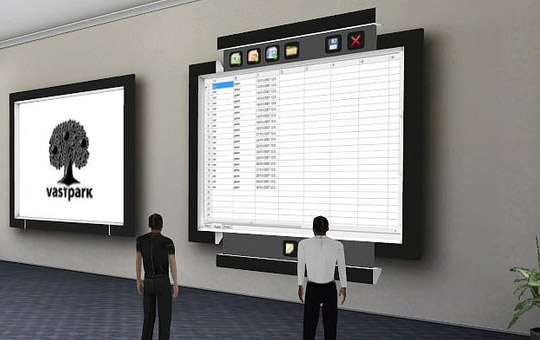
Collegues collaboratively creating an excel forumla within a virtual world

Colleagues collaboratively creating an excel formula within a virtual world

Whilst doing so I’ve noticed that many virtual world technology companies (such as VastPark and SnapGroove) are moving into data visualisation as part of their main offering. They see that once you have an engaged an audience brainstorming within a virtual world, increasingly that audience will want to view it’s own big data and analytics, whilst collaboratively making key decisions or tinkering with their formula for making those key decisions.

To that end I wanted to find out more about the way research staff work and was kindly allowed to attend a group meeting of the Operation Research (OR) Society. Dr Stephen Lorrimer, the Head of Analytical Services for the NHS discussed the importance of OR whilst David Gilding from Nottinghamshire NHS discussed some sample case projects done recently. What was noticeable about the people attending was that they made an outsider interested in finding out more very welcome and I’d like to thank both James Crosbie and Jane Parkin for taking care of me.

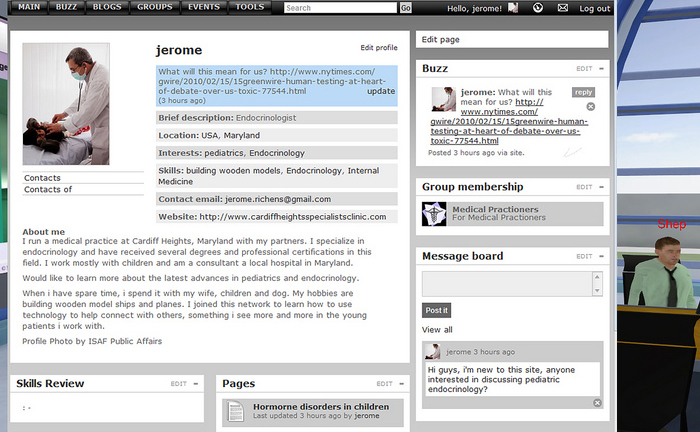
Community of Practice portals can be seamlessly integrated within a virtual world

Community of Practice portals can be seamlessly integrated within a virtual world

The OR teams within the NHS did seem to be quite disparate and I thought could make use of technology in improving communication between themselves to discuss and improve each others work. I also wondered whether having a communications platform (as in the title!) could help improve QA within a group by allowing disparate researchers to interactively work together.

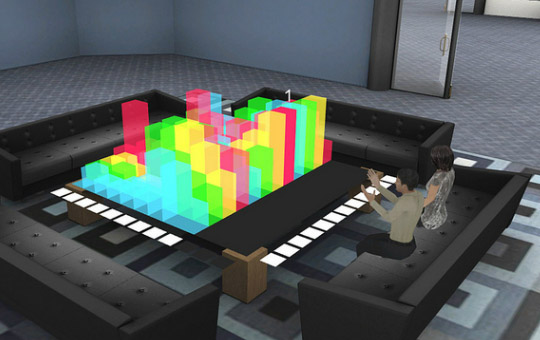
A VastPark virtual world displaying a large dataset

A VastPark virtual world displaying a large dataset

Jane Parkin invited me to join the OR society and I’m very keen on doing more work to see how analytical research work can be improved using communications technology such as that provided by VastPark and SnapGroove, as well as using that technology to improve links between these staff and key decision makers.

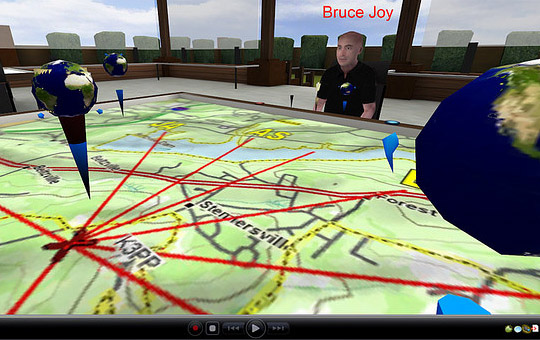
A VastPark world displaying geo-specific data set

A VastPark world displaying geo-specific data set

Networking Drone Data

I noticed with some puzzlement Eric Schmidt, Head of Google, calling for civilian drone technology to be regulated, warning about privacy and security concerns.

Like most cynacists I then got to thinking how could such new technology harm the established data magnets.

video-civilian-drones-articleLarge

My first thought was that if drones could share land and road data, with local enthusiasts being able to pin-point accident blackspots long before established providers could. The potential for this type of super up to date data could harm companies such as Google who provide a more traditional mapping function. Not to mention that using drones could produce a much more up to date Street View function.

I then saw a riveting article regarding the possibility the file-sharing drones and an announcement from Pirate Bay that in future parts of its site could be hosted on GPS controlled drones. In this way, they could provide a completely unrestricted “airborne Pirate Bay”.

I wondered if other people viewed drone technology as divisive or ultimately a technology for improved change.

Presenting at the forthcoming C2ISTAR Learning Conference sponsored by the Defence Science & Technology Laboratory (DSTL)

Myself and a colleague, Just Harris, will be presenting a white paper on learning innovation within the Contemporary Operating Environment at a forthcoming learning conference in March at Qinetiq’s Farnborough site.

Other presentations will be made by Qinetiq as well as Newmann and Spurr (NSC). NSC are currently the company providing the JCOVE simulation service for both pre-deployment and in-theatre learning.

Our paper will discuss a number of streams:

  • Communities of Practice for enhanced knowledge retention
  • Collaborative Virtual Worlds and their use within the military arena
  • Inexpensive off the shelf serious games for improving strategy/influencing skills
  • The future of semi-autonomous characters within tailored made simulations, such as VBS2.

Following presentations their will be lunch and a live online demonstration of the use of a virtual world for collaborative learning.

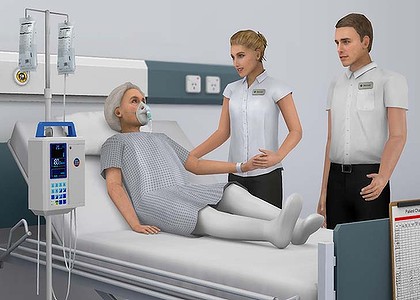
art-Nursim--420x0

The demonstration will be using VastPark technologies, for a video example of their work, go to this link: http://vimeo.com/49000257

NonKin Village: Autonomous avatars for 3D simulation

Recently I came across a fantastic university project that adapts avatars within VBS2 (a military based simulation framework) so that they are completely autonomous.

Scenes can be created so that multi-player students can gain experience in foreign cultures and learn to be sensitive to local norms, values, relationship building, and stakeholder issues prior to arriving for real.

This type of 3D learning simulation is useful for many types of training such as multinational corporations tutoring their workers, international aid organisations training their field representatives, and diplomatic advisors and military forces needing to learn how to handle counter-insurgency, stabilisation and development issues.

Why not take a look at the video below:

Communities of Practice for Tacit Knowledge Retention

About 2 years ago the Royal Navy had a requirement to outsource their Marine Engineering training. We were in discussions with regards to how they saw their new generation of learning evolving, and some themes were similar to other large-scale engineering clients.

Marine Engineers seem to have a massive amount of TACIT knowledge. By that I mean in-depth important knowledge that they need, but can’t really tell you where it came from. Most of the time its handed down from senior to junior over time. This presents a real learning risk in that, over time, with expert senior engineers retiring, there is a real possibility of losing the ability to train new graduates effectively.


On the community side

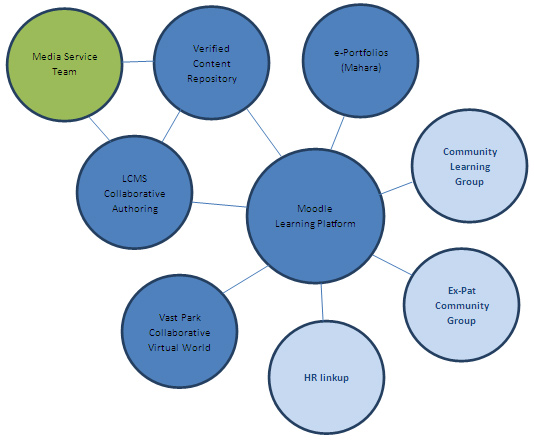
It was important that we devise a system that helps to identify potential knowledge gaps by being more ‘in touch’ with its own learning community as well as experts from within that might previously be ignored.

Setting up a community learning group for your own learning professionals, allows them to keep in touch with each other, to discuss how differing learning needs are being met. 

Also setting up an Ex-Pat (or soon to be Ex-Pat) community group allows senior engineering professionals to join in and discuss their views on how we able to improve graduate induction training as well as on-going work-based learning programmes.

Having a simple HR linkup also allows us to zero in on experts in the undergrowth who are approaching retirement age and see if we can bring them on board into our community discussion groups.

On the technology front

We chose the ’open source’ Moodle platform because:

  • It could be de-centralised, so that individual departments could take control of their own curriculum. Invariably, large learning platforms in large organisations are seen as too distant, too remote. Having a flexible learning platform that would fit the need of every department was a major goal for us
      
  • Was extremely easy to use, as we wanted our learning curriculum to grow as each department is able to better identify and fill training gaps.
     
  • Was affordable

We added a Mahara e-Portfolio system to our mix as it was important to allow university graduates the opportunity of bringing their university e-Portfolios with them to their new career. This allowed for far more intimate knowledge of graduates.

It was also important to allow internal learning experts (as well as senior experts) the opportunity to easily add quality new learning content to fill training gaps quickly. We also proposed our own in-house rapid authoring tool that is easy to use, yet powerful enough to produce compelling e-learning.

And to help with the production of this rapid e-learning, a media services team combining graphics artists, 3D modellers, as well as training professionals is was to be on-hand to bring all this content to life.

Another vital part of our relationship with this client was to recognise that they have many of their best experts in distant foreign lands. So we devised a virtual world server called ‘Vast Park’ that allows disparate experts (as well as graduates) the opportunity to meet up in a virtual world…. Brainstorm, share ideas, and collaboratively help each other.

VBS2 as a movie making tool

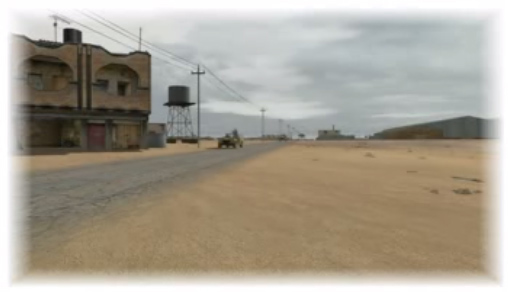
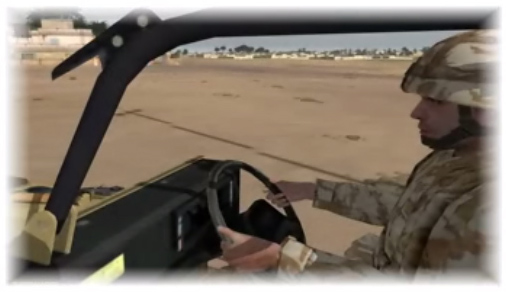
On a recent project I got the chance to use VBS2 to create an animated sequence. I’d seen many guys produce some fantastic animated scenes on YouTube so thought I’d have a go myself and see if it would work on a project.

The results were OK, with more time I reckon I could produce something quite dramatic.


Movie snippetMovie snippetMovie snippetMovie snippetMovie snippetMovie snippet

Research into Live Virtual Constructive (LVC) Simulation

Last year I researched the idea of merging real-life data into a virtual simulation, a concept know as Live Virtual Constructive (LVC).
 
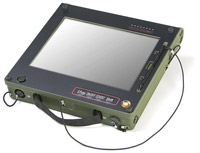
I integrated VBS2 with the Royal Artillery’s new Fire Control Battlefield Information System Application (FC-BISA), a system that provides an officer with a ruggedised handheld that they can use to order in artillery by inputting GPS information on insurgents.

BISA Hanheld

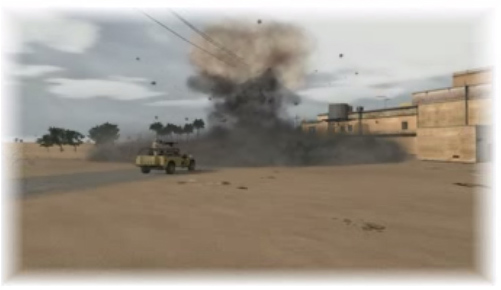
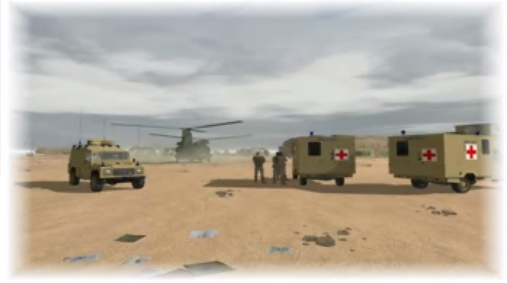
In our example I was able to fully integrate FC-BISA with VBS2 so that a student could traverse a virtual battlefield and on seeing a group of insurgents could order in artillery fire using the real handheld system. The plug-in I created for VBS2 would then check artillery orders being processed by artillery units and then model the explosion of artillery shells in the virtual world at the exact time and place where they should land. The insurgents who survive would then dig in and fight or flee, and a student could then order in more artillery fire at their discretion.

View in VBS2 
Interesting times lay ahead.


Microsoft Surface within a Collaborative Virtual World

Attended a fantastic demonstration on Friday in a virtual world from the guys at VastPark.

Once in the world I was shown a seat at a microsoft style surface table, where Bruce Joy and Tim Glew from VastPark proceeded to introduce office documents, websites and other media onto the table.

I could take hold of each object, re-size and display each object full screen, whilst we all continued chatting via VOIP in the virtual world.

A fantastic piece of collaboration and I’m looking forward to seeing more from these guys.

Collaborative Virtual Worlds

In some of my spare time I’m researching the use of virtual worlds in business and learning.
Currently I am evaluating a tool called Vast Park which is a virtual world platform with lots of collaborative features that allow disparate colleagues to meet and share/edit documents from within a virtual environment.
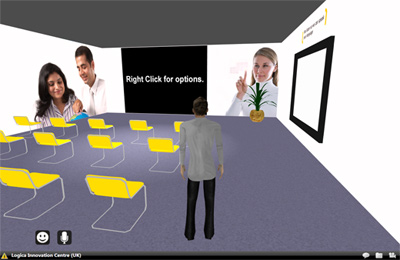
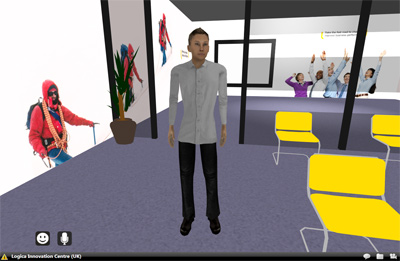
In the images below you can see me in my first Vast Park virtual world, which I’ve created to be a replica of the Innovation Room in London that the company I work for use to present to clients. In this virtual world I can meet/greet and collaboratively edit office documents or just do a powerpoint or video presentation for people wherever they may be in the world.
Virtual World Sample 1

Virtual World Sample 1

Virtual World Sample 2

Virtual World Sample 2

Vast Park is .net based and developers can add there only .net extensions, so soon I’m hoping to add extra in-world features.