openEar – Open Source Emotion Recognition Toolkit

I’ve been looking at using the openEar open source emotion recognition toolkit within a Windows 8 development, in the first case, to create a simplistic emotion recognition interface, that could be used within a military simulation or even a smartphone game.

emotional-smartphone-2

At the moment I’m getting my head around it, from within Visual Studio, but once I’ve saved some pennies I will try and integrate it into Xamarin to try and create a cross platform smartphone library.

Expressing yourself in a virtual world

Earlier in the year I attended a small C2ISTAR workshop at Qinetiq where I discussed the usefulness of collaborative virtual worlds such as VastPark, within military training. I was asked at the time if there was anyway of improving facial responses in avatars along with improved gesturing.

So I was very interested when I came across a tool from Mixamo called Face Plus, which can capture a users expressions using their webcam and use that within a simulation in realtime.

I think if this type of system could be incorporated into a collaborative virtual world to help improve key areas of training such as cultural awareness and the issues around the contemporary operating environment. Sure network traffic (sending/receiving facial gestures) issues would need to be overcome, but still, I see real potential for training applications.

Chalk and Talk in a Virtual World

Over the past few years VBS2 has swiftly become pretty much the standard 3D simulation tool in use within most NATO countries, whether that be for training or analytical purposes.

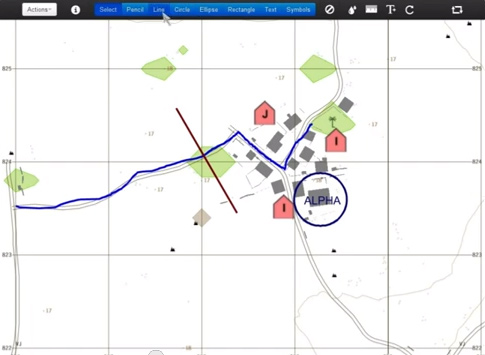
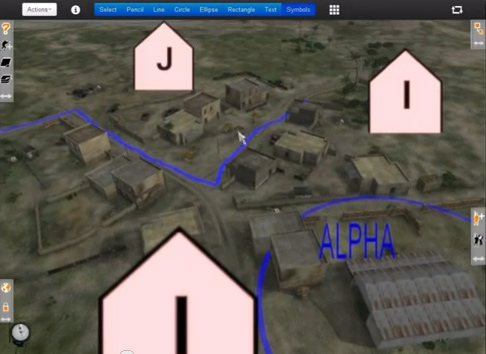
It’s upcoming new release will see the ability to use simulation as a presentation background for instructors in classrooms via its new chalkboard feature. Information and associated military symbology can be drawn on top of any 3D terrain as well as on top of previously played scenarios.

chalk1

Giving instructors the ability to create visually engaging lessons that overwise might have been delivered with old fashioned powerpoint can really make for compelling viewing. Especially if an instructor could write on top of previous scenarios done by groups of students, highlighting correct and incorrect practices.

chalk2

I personally feel that this concept could be extended to produce high quality Computer Aided Instruction (CAI) quickly on a large scale.

chalk3

Gamification and Communities of Practice

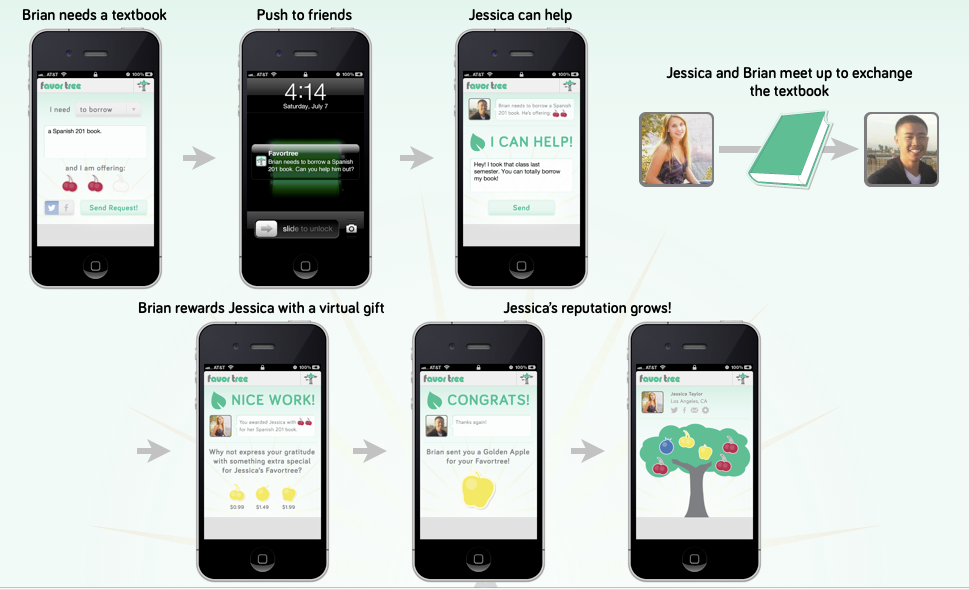
I was recently looking at the concept FavorTree (now discontinued unfortunately) which was a mobile gamification app designed to display the good work any person was doing within the neighbourhood.

FT

Lend out your ladder or teach someone how to unblock a drain and you would see your virtual ‘tree’ gaining fruit.

It immediately reminded me of a Community of Practice (CoP) called Fiery Spirits (http://vimeo.com/16024731) which connects people who have a shared interest in making a difference in rural communities.

I was wondering if anyone has combined Gamification within a CoP, in the case of Fiery Spirits, to better reach out to younger members of the community and promote the idea of being a good neighbour, sharing and learning together.

Unity: A simulation/games engine that can produce Film/TV animated work?

For me it’s always been an issue that you can’t really use your real-time simulation/games engine to develop pre-render animation work. But then again they’ve never been made with that in mind.

I remember on a previous project we’d have to model in 3DS Max, then if we were simulating we’d move our designs onto Quest3D, or if we were doing some animation work, we’d use Poser.

Wouldn’t it be great if we could do all that in one tool!

Well the latest incarnation of Unity (v4) is purporting to do just that and it’s creators have produced a really nice piece of pre-render animation to back up their claim. I’ve included it below:

http://www.youtube.com/watch?v=YdNdEuU30m4

Whilst I don’t think their quite their yet, the sample does show that sometime soon we can have a one stop shop for either TV/Film work as well as simulation/gaming.

Animated cartoon example

I recently produced a quick sample of how one could use cartoon characters as part of my company’s internal courseware delivery. The approach wasn’t used, but I thought I’d provide a link to the sample in case anyone wanted to take a look.

GameTweet

I was watching a geek Tv programme last night where a team developed something they called TwitterCat for a woman who wanted to keep tabs on her Tabby! They installed sensors (eg in the cat flap) that sent twitter feeds to Tabby’s twitter page.

It got me thinking whether any games publishers or virtual world platforms have done the same with their titles.

Say you’ve attained a certain accreditation within the game, it could tweet it to your twitter page or send an accreditation post to your facebook/google+ account.

The same process could also be used as a within business systems employing Gamification/Captology priniciples.

If this is already been done, I’d love to hear from anyone who can give me more information.

The Google Search Consultant

Like me you’ve seen these guys before, they come into a team meeting having spent the entire day before googling every part of a solution/technology they don’t understand, then they try and grill you in the meeting. Hey I don’t mind it, I find it quite refreshing, but recently it went to a different worrying level.

An internal client had a requirement and I was invited in to give a presentation of my thoughts. I was on safe ground, I could only think of a handful of guys in the company who had the experience to do the work. So I give my presentation, it’s caveated, I’m not aiming too high because the client’s budget is ridiculously low, I’m delivering an expectation based on value.

Then 20mins in, a consultant colleague starts discussing that he’s seen better and is sure we can deliver a better product. He has nothing to back his claims up, I’m left in a quandry, do I enter into a debate with him about his lack of expertise, no, he’s trusted by the client and that trust is important, plus one of us must stay professional, so I take it on the chin.

After the meeting everything becomes clear. He doesn’t like my semi-automated low cost solution that matches the client’s budget. He’s seen a new tool that he’s wanted the division to invest in but has been looking for a project that would support it, and this is it.

He then offers a new solution to the client using the tool we don’t have, stating all it’s benefits and non of its negatives. The client is chuffed to bits.

I ask him whether it was worth belittling me in the meeting and discuss that it’s not a good idea proposing a solution we haven’t delivered before using an expensive tool I have reservations about, not a good decision to ask these questions. He thanks me for my time and states he’ll get in touch if they need my expertise in the future.

My outbox doesn’t stay quiet for too long though, he’s soon inviting me back into an email chain for my thoughts. Looking down the chain I understand why.

He’s costed the new solution, it’s a snip at around 3 times the original price. The client hits the roof, they’ve realised the benefits they were sold were actually benefits to us, not them. The tools automation would only decrease cost for future projects much further down the line and why should they pay.

I won’t go on further with the story as things are still in flux, suffice to say that I’m hoping the consultant will realise the error of their ways, but I doubt it.

That damn google search has a lot to answer for sometimes.

The Drone Co-operative

Introduction

With the advances of commercial drone technology and parallel computing I’ve started to envisage a possible future where small companies or a co-operative of entrepreneurs can create there own city-wide internet/telephony platforms.

The main premise is that commercial drones would be used to deliver a small-scale web service to customers. This service would allow users to freely access a city-based intranet/social media service which is separate from anything offered on the internet, therefore offering a more secure method of local communication. 

Drones

Separately, full web-access could be offered for a monthly fee. Again to create a more secure framework, an integrated web search feature would be introduced therefore by-passing existing web offerings such as Google and Bing.

This integrated search would give preference to local search results over what we have now, which is a conglomerate based one, with large companies able to hold sway.

Users may flock to the new system in the knowledge that access data on them is not being offered for use by conglomerates.

In a world where the introduction of Augmented Reality technology such as Google Glasses and the inferred extra private data that will eventually be held on consumers, those consumers may now be extremely interested in having a new type of secure local web provider.

The Co-operative Approach

I foresee a situation whereby a number of small drone companies as well as private entrepeneurs would come together as a co-operative so that there drones could be used in this manner, therefore reducing cost issues.

These commercial drones would obviously continue in their normal business operations, providing specialist contract work to larger companies.

Technical advances envisaged

Obviously the above technical platform is not available right now, it takes into account that advances in certain areas will continue:

  • that commercial drones will continue to evolve:
    • have greater range and time in the air
    • can be placed into specified geosynchronous orbits
    • have on-board server technology
  • that the advances in parallel computing continue to gain pace offering small companies the ability to create there own high performance server farms for a very low outlay.

The following web articles give credence to the above statements:

http://news.bbc.co.uk/1/hi/programmes/click_online/9708309.stm

http://mashable.com/2012/03/19/the-pirate-bay-drones/

http://phys.org/news/2013-04-adapteva-parallel-boards-summer.html

http://www.azcentral.com/business/news/articles/20130424telecom-equipped-drones-could-revolutionize-wireless-market.html?nclick_check=1

Next steps

I do need to do some more thinking about whether this really would be something people might be interested in and whether government would indeed ever allow it. I’m extremely interested what this approach could mean for new concepts such as Big Data, as we move forward.

Can Big Data + Analytics + Community of Practice + Virtual World = Collaboration for Key Decision Making

I know, not a very catchy title, but for now it will do!

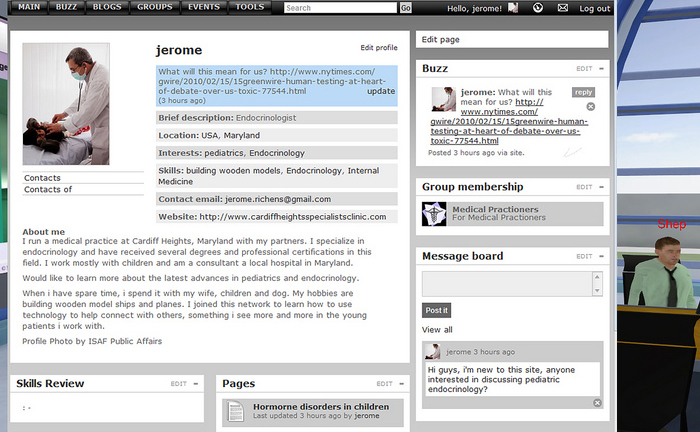
For quite some time I’ve been promoting the concept of integrating Communities of Practice with a Virtual World to allow large organisations to bring staff together in one information portal that fosters collaborative working and lifelong learning.

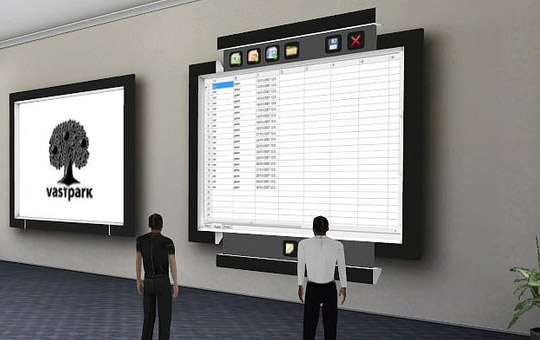
Collegues collaboratively creating an excel forumla within a virtual world

Colleagues collaboratively creating an excel formula within a virtual world

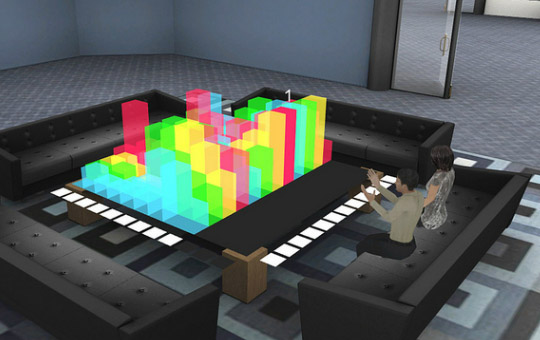
Whilst doing so I’ve noticed that many virtual world technology companies (such as VastPark and SnapGroove) are moving into data visualisation as part of their main offering. They see that once you have an engaged an audience brainstorming within a virtual world, increasingly that audience will want to view it’s own big data and analytics, whilst collaboratively making key decisions or tinkering with their formula for making those key decisions.

To that end I wanted to find out more about the way research staff work and was kindly allowed to attend a group meeting of the Operation Research (OR) Society. Dr Stephen Lorrimer, the Head of Analytical Services for the NHS discussed the importance of OR whilst David Gilding from Nottinghamshire NHS discussed some sample case projects done recently. What was noticeable about the people attending was that they made an outsider interested in finding out more very welcome and I’d like to thank both James Crosbie and Jane Parkin for taking care of me.

Community of Practice portals can be seamlessly integrated within a virtual world

Community of Practice portals can be seamlessly integrated within a virtual world

The OR teams within the NHS did seem to be quite disparate and I thought could make use of technology in improving communication between themselves to discuss and improve each others work. I also wondered whether having a communications platform (as in the title!) could help improve QA within a group by allowing disparate researchers to interactively work together.

A VastPark virtual world displaying a large dataset

A VastPark virtual world displaying a large dataset

Jane Parkin invited me to join the OR society and I’m very keen on doing more work to see how analytical research work can be improved using communications technology such as that provided by VastPark and SnapGroove, as well as using that technology to improve links between these staff and key decision makers.

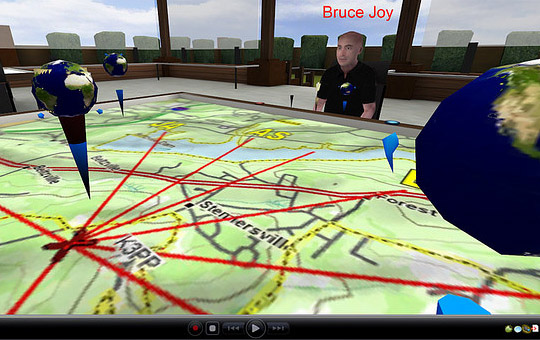
A VastPark world displaying geo-specific data set

A VastPark world displaying geo-specific data set