Corporate Collaborative Virtual World

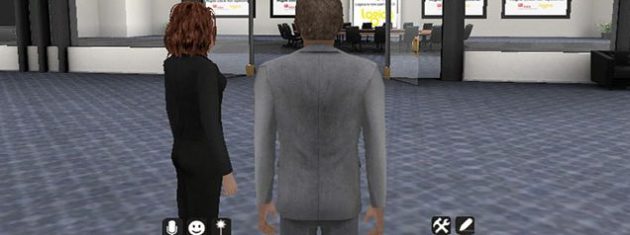
As part of last month’s presentation to DSTL/Qinetiq we hosted a small virtual world for attendee’s to see how collaboration and communication could work.

Untitled-6

The virtual world was based around version 2 of VastPark’s software platform although soon we’re hoping to get our hands on version 3 later this year which will:

  • offer a HTML5 player for users to log into a virtual world whilst they are using a tablet/smartphone
  • update it’s core virtual world player to use the Unity3D rendering engine allowing for greater visual quality
  • bring full integration with the company’s social media offering so that companies can have social media and a virtual world presence from one portal

Untitled-5

Untitled-3

Is Mobile Learning about to become, well, simply just Learning

Over the last few years, everyone and his dog has been writing, researching and presenting their ideas on how everyone should incorporate a mobile learning strategy into their curriculum.

Obviously we are all sold on the need to move to HTML5, but the argument starts after that. The current hard sell doing the circuits is that we place our faith in a responsive style of design and development (Responsive Elearning Design) whereby we use an authoring tool that allows us to develop content that downgrades itself to match the device you are using. The key drivers for the philosophy has been that mobile students:

  • don’t have the bandwidth to download desktop based learning
  • don’t have the screen real estate to view desktop based learning
  • don’t want to view a huge 2 hour desktop course, only small chunks at convenient times
  • can’t view desktop courses on a small smartphone screen.

The problem with this approach is that everyone of the above factors has already been overcome. Yes, not in full circulation, but they have been overcome:

  • people are starting the slow adoption of 4G that will make their mobile phone access quicker than my current village broadband!
  • there are now a trickle of HD smartphones on the market. These phones have a higher screen resolution than the Logica laptop you are using to view this blog right now!
  • open source learning management systems such as Moodle are now organised in a way that they promote the creation of courses by using a series of small modular chunks of learning.
  • Screens on upmarket smartphones are slowly getting larger.

True, the above factors could still take 18 months to fully come mainstream – but in my view it won’t be long before our teenagers are all surfing the web on HD smartphones using 4G.

Simply, now, with a Moodle server and a copy of the latest Adobe Captivate, one can create multi-device learning without the need for any huge change in development.

Networking Drone Data

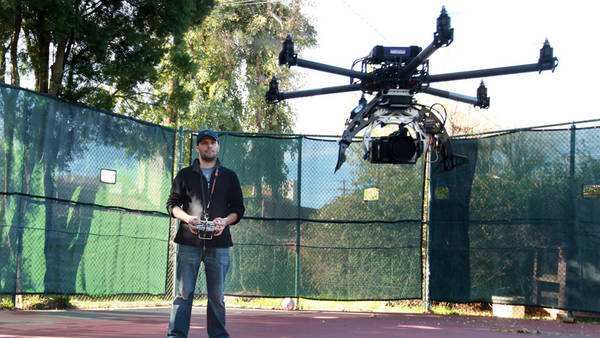
I noticed with some puzzlement Eric Schmidt, Head of Google, calling for civilian drone technology to be regulated, warning about privacy and security concerns.

Like most cynacists I then got to thinking how could such new technology harm the established data magnets.

video-civilian-drones-articleLarge

My first thought was that if drones could share land and road data, with local enthusiasts being able to pin-point accident blackspots long before established providers could. The potential for this type of super up to date data could harm companies such as Google who provide a more traditional mapping function. Not to mention that using drones could produce a much more up to date Street View function.

I then saw a riveting article regarding the possibility the file-sharing drones and an announcement from Pirate Bay that in future parts of its site could be hosted on GPS controlled drones. In this way, they could provide a completely unrestricted “airborne Pirate Bay”.

I wondered if other people viewed drone technology as divisive or ultimately a technology for improved change.

Providing the learning platform for every school in a country!

It’s always an eye opener when a company from your home town receives some quite amazing recognition.

Frog, based in Halifax, provide learning systems and are currently delivering on a contract to provide every one of the Malaysia’s 10,000 state schools and 10 million students with access to Frog’s Virtual Learning Environment (VLE) – a fully featured learning platform.

Widget-Tray

In recognition of this they have been shortlisted for the prestigous ComputerWorld award, a 25 year old US-based honors program celebrating companies making an impact in the welfare of society using ICT.

If you’d like know more go to their site http://www.frogtrade.com their drag and drop interface for creating everything – learning platform, content, student views etc etc is very interesting and the platform seems to be multi-tenancy too.

WHO MOVED MY CHEESE

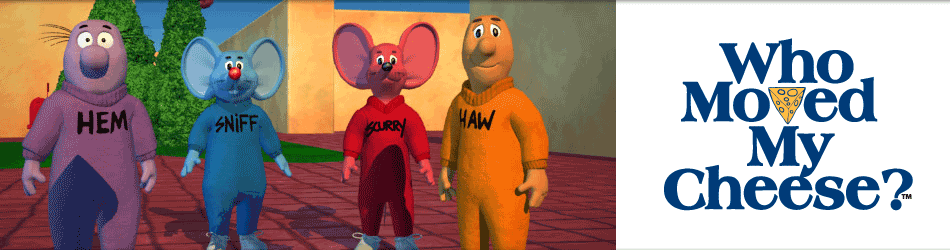
Last week I got round to reading one of my wife’s new books, “Who moved my Cheese”, a quick book which attempts to help it’s readers make sense of any change currently happening in their life, in a fun and simple manner.

Masthead-WhoMovedMyCheese

One interesting part of the book, early on, makes the statement that …companies are constantly changing. They keep moving our Cheese. While in the past we may have wanted loyal employees, today we need flexible people who are not possessive about ‘the way things are done around here’.

It then describes a major upheaval in the lives of 4 characters and how they respond to change. Some people may think the book is aimed a little too simplistically but its still a good read and I’d be interested in what anyone thinks of it.

A youtube version of the story can be seen here – http://www.youtube.com/watch?v=P4Mb-x8UWRA

Presenting at the forthcoming C2ISTAR Learning Conference sponsored by the Defence Science & Technology Laboratory (DSTL)

Myself and a colleague, Just Harris, will be presenting a white paper on learning innovation within the Contemporary Operating Environment at a forthcoming learning conference in March at Qinetiq’s Farnborough site.

Other presentations will be made by Qinetiq as well as Newmann and Spurr (NSC). NSC are currently the company providing the JCOVE simulation service for both pre-deployment and in-theatre learning.

Our paper will discuss a number of streams:

  • Communities of Practice for enhanced knowledge retention
  • Collaborative Virtual Worlds and their use within the military arena
  • Inexpensive off the shelf serious games for improving strategy/influencing skills
  • The future of semi-autonomous characters within tailored made simulations, such as VBS2.

Following presentations their will be lunch and a live online demonstration of the use of a virtual world for collaborative learning.

art-Nursim--420x0

The demonstration will be using VastPark technologies, for a video example of their work, go to this link: http://vimeo.com/49000257

Moodle, HTML5, Gamification and Zend

Late last year I updated my HTML5 Moodle web app so that it would work with Moodle 2.x and it’s new file system repository.

Other than that I haven’t done too much, so this year I will be aiming to improve the robustness of the system by rebuilding it using Zend/PHP rather than PHP itself.

This may take some time but will improve the behind-the-scenes structure.

I’m also going to start to see how I can use visual dashboards within Moodle to create gamificated scoreboards so young students can see whose using Moodle and it’s social features the most.

NonKin Village: Autonomous avatars for 3D simulation

Recently I came across a fantastic university project that adapts avatars within VBS2 (a military based simulation framework) so that they are completely autonomous.

Scenes can be created so that multi-player students can gain experience in foreign cultures and learn to be sensitive to local norms, values, relationship building, and stakeholder issues prior to arriving for real.

This type of 3D learning simulation is useful for many types of training such as multinational corporations tutoring their workers, international aid organisations training their field representatives, and diplomatic advisors and military forces needing to learn how to handle counter-insurgency, stabilisation and development issues.

Why not take a look at the video below:

Visualisation: Using AVATAR movie techniques (Part 2)

Since developing my draft scenes in the previous post, I’ve managed to find some time to move onto start modelling some of the main prop items that my final animation will use.

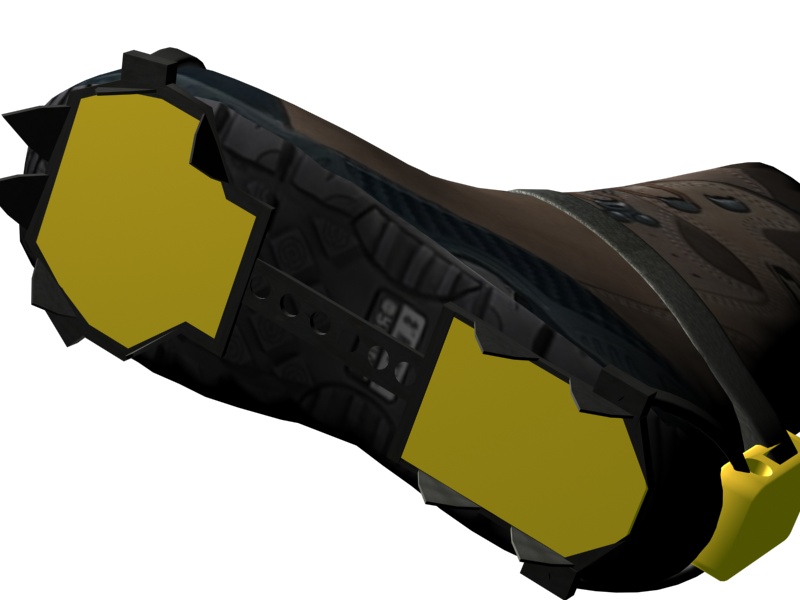
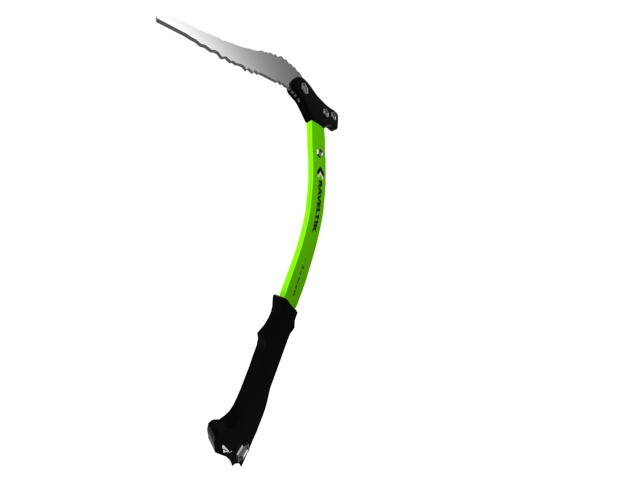
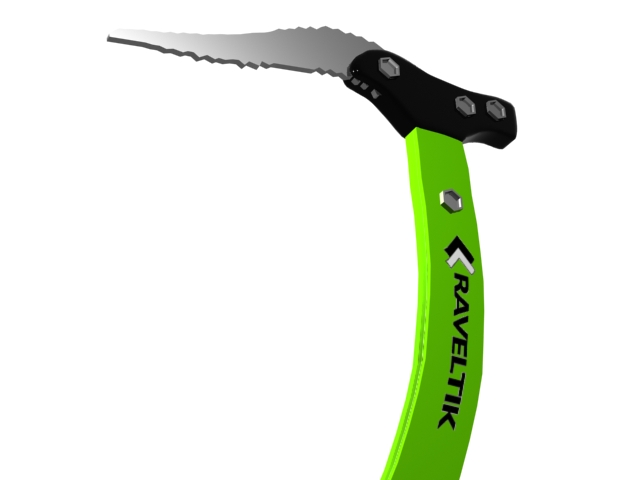
As the animation will feature mountaineers, they obviously need realistic looking kit, so I’ve initially created a boot model with attached crampons along with a Raveltik ice axe.

I’ve included images of them below:

When I have time I’m going to move onto the modelling the mountaineers themselves!

Visualisation: Using AVATAR movie techniques (Part 1)

After creating my first HD quality 3D animation discussed in an earlier post, I decided to make a conscious effort to produce something on a much grander scale.

To do this I’ve started using a product called Vue, which was extensively used to create the Pandora landscapes seen in AVATAR. I’m using the personal learning edition of Vue for the moment (whilst I save up for the full version), but it is fully featured.

As you can see from my draft scene pictures, the storyline is to be based around a mountain climbing movie and in future posts I’ll give an update on how I’m creating the characters.

Mountain scene

Mountain scene